


Medically reviewed by Michael V. Cushing, MD | Reviewed August 2026
When I recommend a biceps tenodesis, I don’t expect patients to already know what it is. Unlike some other shoulder procedures, it’s not a term most people encounter until they’re discussing treatment with a shoulder specialist. In this post, I’ll explain what a biceps tenodesis is, why I recommend it in certain situations, and what the procedure is designed to accomplish.
Key Takeaways
- A biceps tenodesis detaches the long head of the biceps tendon from its attachment point and reattaches it lower on the arm bone, at a more stable location.
- It’s commonly used for biceps tendon pain, tearing, or instability, and it’s also a treatment option for certain SLAP tears involving the top of the shoulder socket.
- Compared to simply cutting the tendon loose, known as a tenotomy, tenodesis is designed to preserve more of the muscle’s natural strength and contour.
- Recovery generally involves a period of sling use followed by a progressive physical therapy program, similar in structure to other arthroscopic shoulder procedures.
What Is a Biceps Tenodesis?
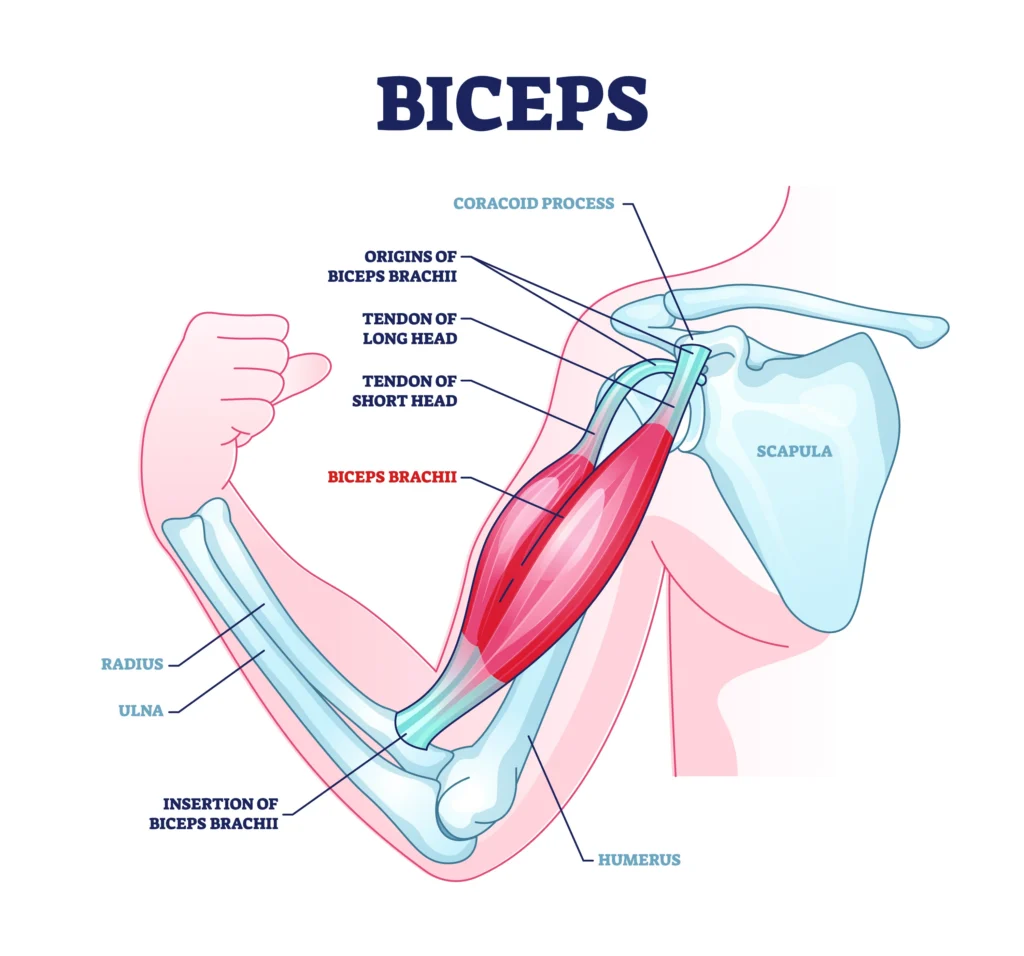
The biceps muscle has two tendons connecting it to the shoulder, and the one relevant here is called the long head of the biceps tendon. It travels up through a groove in the front of the shoulder and attaches at the top of the labrum, the ring of cartilage that lines the shoulder socket. That attachment point can become a source of significant pain when the tendon becomes inflamed, frayed, or torn, or when the labrum itself is damaged.
A biceps tenodesis addresses this by detaching the tendon from its original spot and reattaching it to a new location further down, typically in the upper arm bone, using an anchor or screw. The tendon still functions and the muscle still contracts normally, but the problematic attachment point at the top of the shoulder is no longer part of the equation.
What Causes Biceps Tendon Problems in the First Place
Biceps tendon issues tend to develop in one of two ways. The first is gradual wear from repetitive overhead motion, common in swimmers, throwers, and patients whose jobs involve a lot of reaching or lifting above shoulder height. Over time, the tendon can become inflamed within the groove it travels through, or it can fray at its attachment point on the labrum.
The second is a more sudden injury, such as a fall onto an outstretched arm or a forceful pull on the arm, which can tear the labrum at the exact spot where the biceps tendon attaches. Age plays a role as well. As the labrum and tendon naturally lose some of their elasticity over the years, they become more prone to fraying even without a specific traumatic event.
When I Recommend This Procedure
There are a few different scenarios where a biceps tenodesis ends up on my recommendation list. The most straightforward is biceps tendinitis or a partial tear that hasn’t improved with rest, anti-inflammatory treatment, and physical therapy. When conservative measures haven’t given a patient relief and the biceps tendon is clearly the pain generator, addressing it directly tends to be more effective than continuing to manage symptoms.
The other common scenario involves a SLAP tear, a specific labral injury at the point where the biceps tendon attaches to the socket. For some patients, particularly those beyond their competitive throwing years, I find that a tenodesis offers a more predictable recovery than attempting to repair the torn labrum back to bone, since it removes the damaged attachment entirely rather than asking it to heal in place.
It’s also fairly common for me to discover a frayed or inflamed biceps tendon incidentally while performing another procedure like a rotator cuff repair. In those cases, it may benefit the patient to address the biceps tendon in the same surgery rather than leaving a known problem behind.
What I See in My Patients
The question I hear most often once a tenodesis is on the table is how it’s different from just cutting the tendon and leaving it be, a simpler procedure called a tenotomy. I’ll be direct about my own preference here: for most active patients, especially those who care about upper arm strength and appearance, I lean toward tenodesis over tenotomy. Simply releasing the tendon without reattaching it can lead to a change in the muscle’s contour, sometimes called a “Popeye deformity,” along with a modest loss of strength during certain movements like forearm rotation. Tenodesis avoids most of that by giving the tendon a new, stable home.
I also see a fair number of overhead athletes and weekend competitors in my Newnan and Fayetteville offices who are worried that this procedure will end their playing days. In most cases, that’s not the reality. The goal of a tenodesis is to eliminate a specific source of pain while preserving as much function and strength as reasonably possible, not to sideline an active patient permanently.
My Approach to This Procedure
When I’m deciding between tenodesis, tenotomy, or an attempt at labral repair, I’m weighing a patient’s age, activity level, and how much the biceps attachment itself is contributing to their symptoms versus the labrum around it. For a younger athlete with a clean, traumatic SLAP tear and no biceps tendon damage, a labral repair alone may still be the right call. For a patient in their 40s or 50s with a degenerative tear and a frayed biceps tendon, I’m much more likely to recommend tenodesis.
I typically perform this arthroscopically, through the same small incisions used for other shoulder scope procedures, which allows me to address the biceps tendon and evaluate the rest of the joint in the same setting.
I also look closely at what the tendon looks like in real time during the procedure itself. Imaging gives a strong preview, but the appearance of the tendon and labrum on the day of surgery sometimes changes my plan. If I get in and find the tendon in worse shape than the MRI suggested, or better shape, I’ll adjust the approach accordingly. We’ll talk about the likelihood of this ahead of the procedure.
Recovery After a Biceps Tenodesis
Recovery follows a similar overall structure to other arthroscopic shoulder procedures. The arm typically goes into a sling for a period after surgery to protect the new tendon attachment while it heals, and early motion is generally limited to protect the repair. From there, physical therapy progresses in stages, starting with gentle passive range of motion, moving into active motion, and eventually into strengthening once the tendon has had adequate time to heal into its new position.
For patients who also had a rotator cuff repair or labral procedure done at the same time, the recovery timeline is generally guided by whichever repair needs the most protection. Return to full activity, especially for overhead athletes, tends to take several months, and I work closely with physical therapy throughout to make sure the shoulder is progressing at a pace that protects the healing tendon rather than rushing it.
I tell my patients that patience during this stretch matters more than it might seem. The tendon needs adequate time to heal solidly into its new attachment point before it’s asked to handle real load again, and pushing that timeline out of frustration is one of the more avoidable ways to end up back at square one. Most of my patients who follow the plan closely end up glad they didn’t rush it.
Summary
A biceps tenodesis isn’t a standalone diagnosis so much as a solution to a specific problem, a painful or damaged biceps attachment at the top of the shoulder. Whether it’s the primary reason for your surgery or something I address alongside a rotator cuff repair or SLAP tear, the goal is the same: remove the source of pain while preserving as much natural strength and function as possible.
If you’ve been dealing with deep, front-of-shoulder pain that hasn’t responded to rest and therapy, or if you’ve already been told a tenodesis might be part of your surgical plan, the next step is a focused exam so we can confirm the biceps tendon is actually the source before moving forward. You can schedule an appointment online or call my office at (770) 502-2175.
Frequently Asked Questions
What’s the difference between a tenodesis and a tenotomy?
A tenotomy simply releases the biceps tendon from its attachment without reattaching it elsewhere, letting it retract. A tenodesis detaches the tendon and secures it to a new location on the arm bone. Tenodesis generally preserves more of the muscle’s natural contour and strength, which is why I tend to favor it for active patients, though a tenotomy can still be appropriate in certain situations, particularly for older or lower-demand patients.
Will I lose strength in my arm after a biceps tenodesis?
Many patients regain functional strength for daily activities and sports. Some patients notice a subtle difference in strength during specific movements, like resisted forearm rotation, though this is usually mild and often not noticeable in everyday life. The procedure is specifically designed to minimize this compared to simply releasing the tendon.
How long until I can return to sports after a biceps tenodesis?
This varies based on your sport, your overall repair, and whether other procedures were performed at the same time. For overhead and throwing athletes, return to full competitive activity typically takes several months of progressive rehabilitation. I work with each patient individually to determine when their tendon healing and strength support a safe return to their specific sport.
