

Medically reviewed by Michael V. Cushing, MD | Reviewed May 2026
If you’ve been dealing with deep shoulder pain that just won’t go away, or you’ve noticed a catching sensation every time you throw a ball or reach overhead, there’s a chance you may be dealing with a SLAP tear. Whether you’re a competitive pitcher, a weekend swimmer, or someone who landed awkwardly during a fall, a SLAP tear can affect how your shoulder feels and functions. In this post, I want to walk you through what a SLAP tear actually is, what the symptoms look like, how we diagnose it, and what your treatment options may include.
Key Takeaways
- A SLAP tear involves damage to the labrum, the ring of cartilage that stabilizes your shoulder socket, at the top portion, where the biceps tendon attaches.
- Common symptoms include deep shoulder pain, a catching or clicking sensation, and weakness during overhead or throwing activities.
- Diagnosis typically involves a physical examination and imaging, most commonly an MRI arthrogram.
- Many patients experience symptom improvement with conservative treatment such as physical therapy. Surgery may be recommended for athletes or those who don’t respond to non-surgical care.
What Is a SLAP Tear?
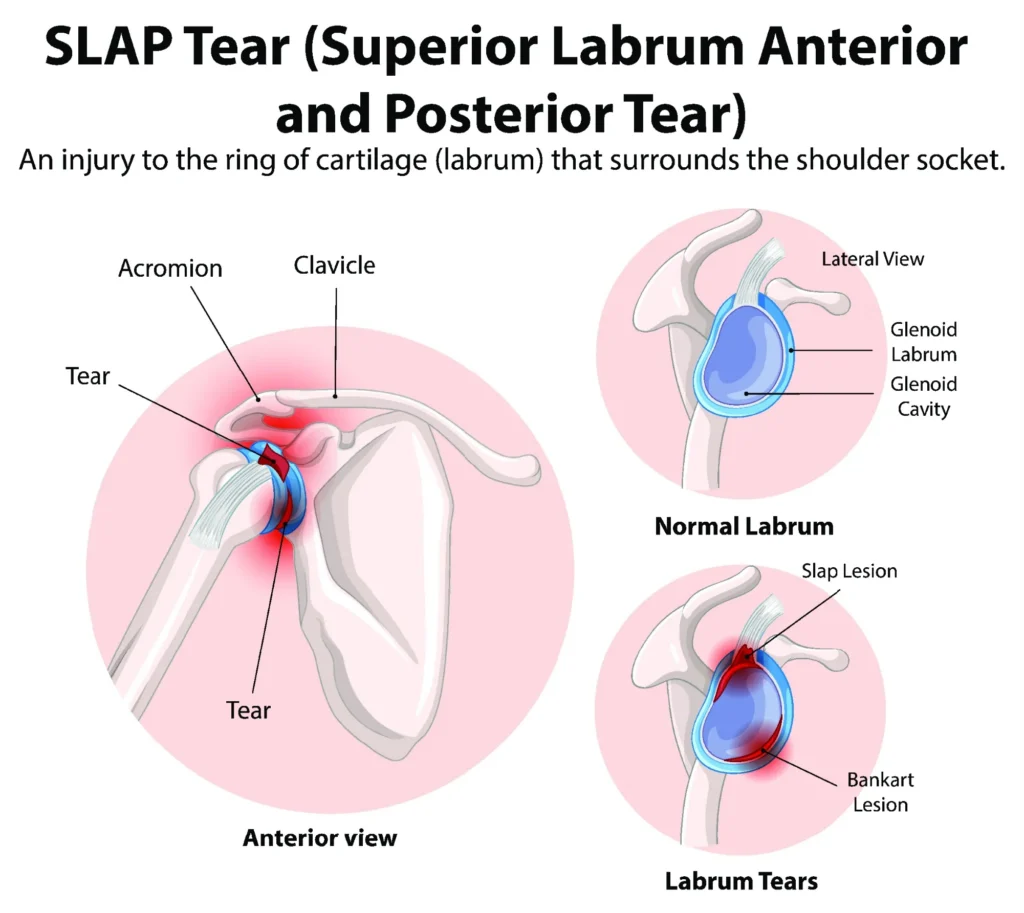
SLAP stands for Superior Labrum Anterior to Posterior. To break it down, your shoulder is a ball-and-socket joint. The socket is relatively shallow on its own, and the labrum, a ring of tough, rubbery cartilage, lines the edge of that socket to help deepen it and keep the ball of your upper arm bone securely in place.
A SLAP tear is a specific type of labral tear that occurs at the top of the labrum, where the biceps tendon attaches to the shoulder. When that area gets torn, whether from a single traumatic event or from repetitive overhead stress over time, the labrum may not function as effectively. That can lead to pain, instability, and the characteristic catching or locking sensation that many of my patients describe as one of the first things they notice.
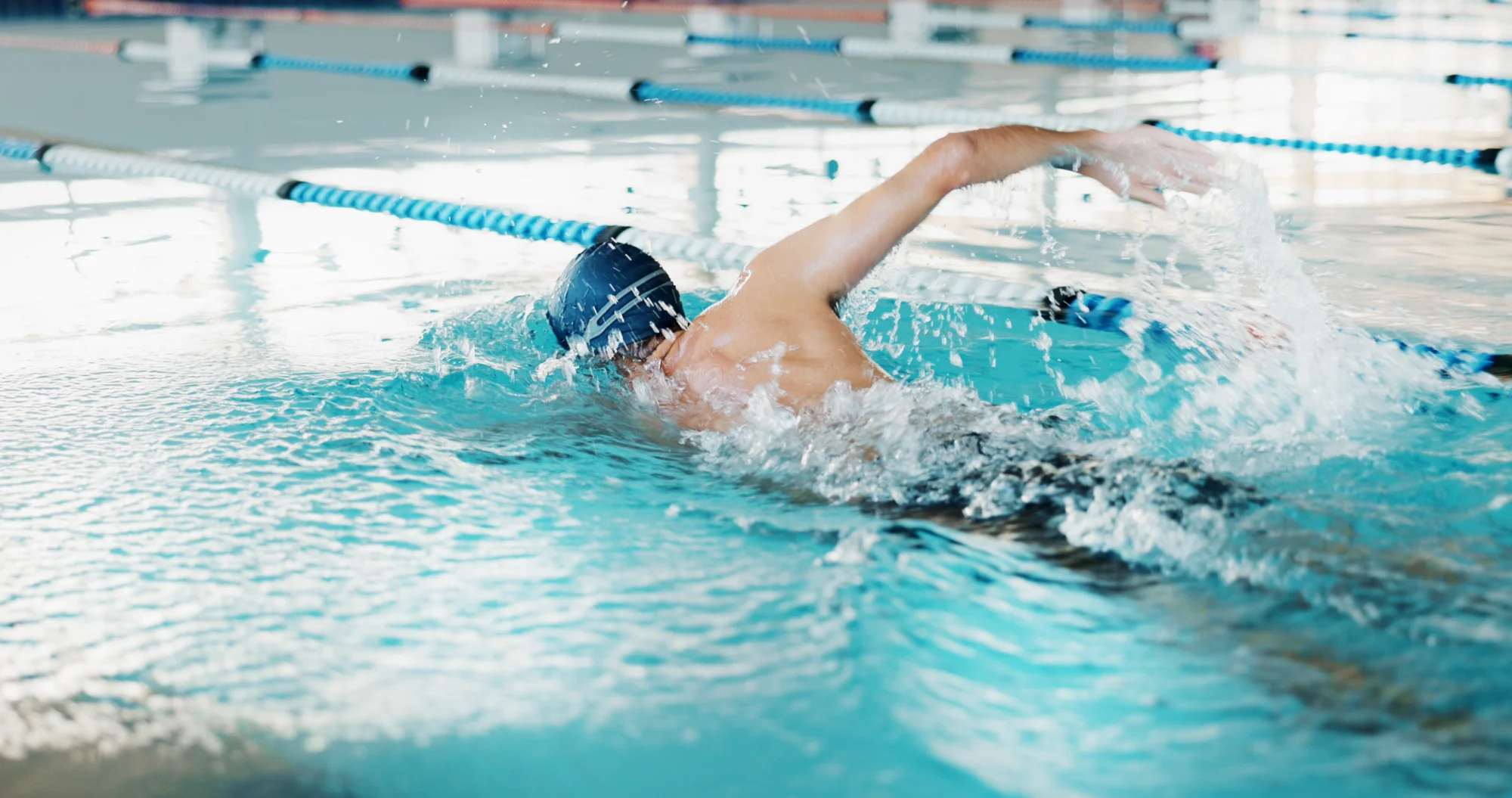
SLAP tears are most commonly associated with overhead athletes such as pitchers, swimmers, volleyball players, and tennis players. But they can also happen to anyone following a fall on an outstretched arm, a sudden jerk or pull on the arm, or a direct blow to the shoulder. Age matters, too. As we get older, the labrum can begin to fray naturally, which means that what looks like a SLAP tear on imaging in an older patient may sometimes be more of a degenerative finding than a true structural injury.
What Causes a SLAP Tear?
In my experience, SLAP tears tend to fall into two general categories: traumatic and overuse. Understanding which type you may have helps guide the treatment approach.
Traumatic causes include falling on an outstretched arm, a sudden jerk or yank to the arm (like catching a heavy falling object), a direct blow to the shoulder, or a shoulder dislocation. These tend to produce a more immediate onset of symptoms.
Overuse causes are more common in overhead athletes and develop gradually over time. Repetitive throwing motions in baseball or softball, high-volume overhead swim strokes, and sustained overhead work or lifting can all place cumulative stress on the superior labrum. Over time, that stress may lead to tearing.
Recognizing the Symptoms of a SLAP Tear
One of the things that makes a SLAP tear tricky to identify is that its symptoms can overlap with other common shoulder conditions. Even so, there are a few patterns I find particularly telling.
The most frequently reported symptom is deep, aching pain inside the shoulder, not on the outer tip, but deeper in the joint itself. That deep pain often gets worse during overhead activity, throwing, or reaching across the body. Many patients also notice a catching, clicking, or locking sensation when they move their arm in certain directions.
Decreased strength is another common complaint. Activities that once felt easy, such as throwing a ball, swimming, or lifting overhead, may start to feel noticeably weaker or less coordinated. For overhead athletes, this can show up as a loss of velocity or accuracy in their throw, often one of the first red flags I hear about during a patient’s first visit.
Other symptoms that may be present include:
- Pain or aching when performing a biceps curl or carrying objects at your side
- A sensation of shoulder instability as if the joint might give out during activity
- Pain that tends to be worst when the arm is elevated and slightly behind the body, often during the cocking phase of a throw
- Difficulty sleeping on the affected shoulder
Not every SLAP tear presents with the same symptoms. Some people even have a tear visible on imaging with little to no pain at all. Context matters enormously, and a thorough evaluation is the only way to draw the right conclusions.
How Is a SLAP Tear Diagnosed?
Getting to the right diagnosis requires more than just one test. When a patient comes in with suspected labral pathology, I start with a detailed conversation about their history, including when the pain began, what makes it better or worse, what activities they participate in, and whether a specific incident triggered it.
From there, I perform a physical examination. Several specific maneuvers can help identify labral pathology. These are useful tools, but they aren’t perfect. The shoulder is a complex joint, and no single physical exam test is completely definitive for a SLAP tear. That’s why imaging plays an important supporting role.
For most patients, I’ll order an MRI of the shoulder. A standard MRI can often reveal significant labral tears, but for SLAP tears specifically, I may recommend an MRI arthrogram, a specialized scan where contrast dye is injected into the joint before imaging. This helps outline the labrum more clearly and may improve our ability to evaluate the tear’s location and extent.
Treatment Options for a SLAP Tear
The good news is that not every SLAP tear requires surgery. Treatment depends on several factors: the severity of the tear, your age, your activity level, your goals, and how long you’ve had symptoms. I always try to match the treatment plan to the patient.
Conservative (Non-Surgical) Treatment
For many patients, conservative treatment is a reasonable first step. Physical therapy is a common component of non-surgical management. A well-designed rehab program focuses on strengthening the rotator cuff and the muscles surrounding the shoulder blade to improve joint stability and reduce load on the damaged labrum.
Anti-inflammatory medications can help manage pain and swelling, especially early on. Corticosteroid injections are sometimes used to address significant inflammation, though I use them selectively and as part of a broader plan rather than as a standalone solution. Temporary activity modification, such as pausing a throwing program while rebuilding strength, may also be recommended during this phase.
Surgical Treatment
Surgery may be recommended when conservative treatment hasn’t provided adequate relief after a fair trial, or when a patient is a high-level overhead athlete who needs to return to full performance as safely as possible.
The most common surgical approach for a SLAP tear is arthroscopic SLAP repair, a minimally invasive procedure in which I use a small camera and specialized instruments through tiny incisions to reattach the torn labrum to the bone using suture anchors. The goal is to restore the normal anatomy of the shoulder and improve stability at that critical attachment point.
In some patients, a biceps tenodesis may be a more appropriate option. This procedure detaches the biceps tendon from its labral attachment and secures it slightly lower on the arm bone, effectively relieving pain while potentially offering a more predictable recovery. The right surgical choice depends on your specific tear pattern, anatomy, and activity goals.
Recovery After a SLAP Tear
Recovery timelines can vary quite a bit depending on whether you’ve had surgery, what type of procedure was performed, and what level of activity you’re returning to. For patients managing a SLAP tear conservatively, improvement is typically gradual. Many people notice meaningful progress within several weeks of dedicated physical therapy, though returning to full throwing or competitive overhead activity often takes longer.
For those who undergo surgery, the early phase of recovery centers on protecting the repair and allowing the tissue to heal. The shoulder is typically immobilized in a sling for a period following the procedure, after which a progressive physical therapy program begins: first restoring range of motion, then rebuilding strength, and finally advancing to sport-specific performance training.
For high-level overhead athletes, return-to-play following surgical repair may take several months and varies based on the extent of the repair, rehabilitation progress, and the demands of the sport. I work closely with each patient throughout every stage to make sure we’re progressing at a pace that supports the repair and sets them up for a lasting result.
Summary
A SLAP tear is a labral injury at the top of the shoulder socket that can cause deep pain, a catching sensation, weakness, and instability, particularly during overhead or throwing activities. The condition affects both athletes and non-athletes, and can result from trauma or years of repetitive overhead stress. Treatment ranges from physical therapy for milder cases to arthroscopic surgery for more severe tears or higher performance demands.
As a shoulder specialist with a focus on sports medicine, I serve patients in Newnan, Fayetteville, and across the surrounding region to evaluate these types of injuries thoroughly and develop a plan that fits their individual goals. Whether you’re a competitive athlete or an active adult who just wants to stay comfortable and functional, don’t ignore persistent shoulder symptoms. Reach out to schedule an evaluation.
Frequently Asked Questions
Can a SLAP tear heal on its own?
In most cases, a SLAP tear does not fully heal on its own, since the labrum has a relatively limited blood supply. However, many people are able to manage symptoms effectively with physical therapy and activity modification, which means surgery isn’t always necessary. The goal of conservative treatment is to reduce pain and build enough stability in the surrounding muscles that the tear becomes less symptomatic.
Is a SLAP tear the same as a labral tear?
A SLAP tear is a specific type of labral tear. The labrum is the ring of cartilage that surrounds the shoulder socket, and a SLAP tear refers specifically to a tear at the top (superior) portion of the labrum, where the biceps tendon attaches. Not all labral tears are SLAP tears, but all SLAP tears are labral tears. The location and pattern of the tear can influence which treatment approach is most appropriate.
Can I continue playing sports with a SLAP tear?
This depends on the severity of the tear and your symptoms. Some athletes manage through a season with conservative treatment, while others find that pain or instability significantly limits performance. I generally recommend getting evaluated before continuing high-level activity so we can assess the injury and develop a plan that protects the shoulder while keeping you as active as safely possible.
