


Arthritis in the shoulder can bring pain, stiffness, and reduced mobility. Reaching overhead or even sleeping comfortably can become difficult. Understanding this condition is the first step toward managing it effectively. In this post, we’ll take a look at various approaches to address shoulder arthritis, including both non-surgical and surgical interventions.
Key Takeaways
- Non-surgical treatments are often the first line of defense. Depending on arthritis severity, these may include physical therapy, medication, injections, and lifestyle adjustments.
- Procedures like total shoulder arthroplasty and reverse total shoulder arthroplasty may be recommended if non-surgical treatments fail to provide relief.
- Prevention and lifestyle modifications play a role. Maintaining good health, engaging in regular, appropriate exercise, and practicing good posture can help protect your shoulder joints.
Understanding Shoulder Arthritis
Shoulder arthritis is a condition in which one or both of the shoulder’s main joints become inflamed, leading to the gradual breakdown of the cartilage that normally cushions the ends of the bones. As this protective layer wears down, individuals may experience pain, stiffness, and a reduced range of motion.
The Glenohumeral Joint
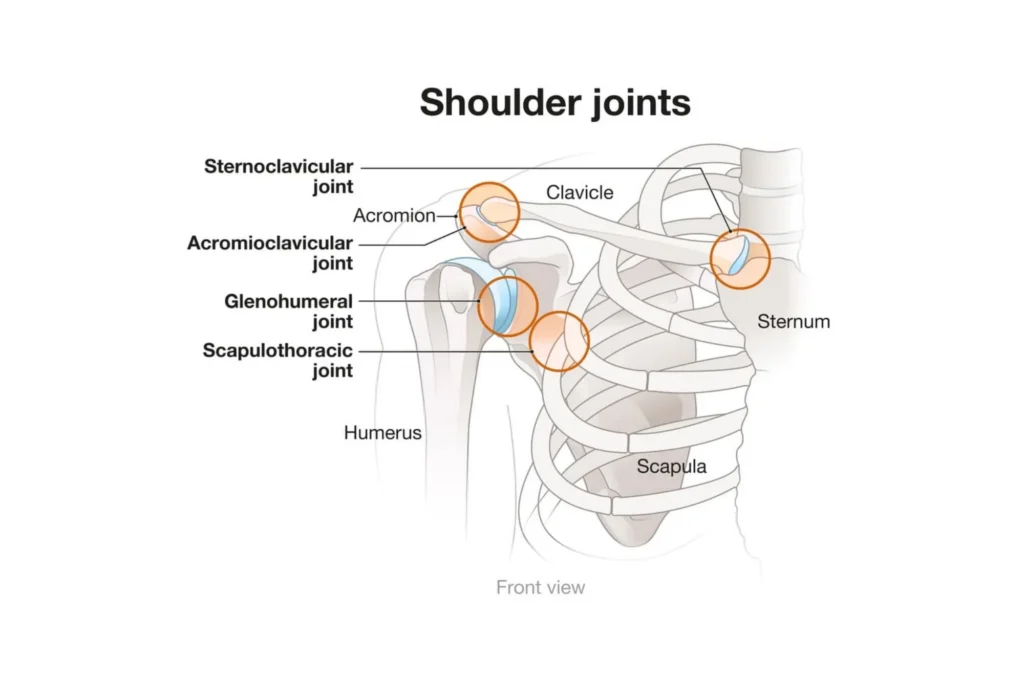
Often called the ball-and-socket joint, this is the main joint of the shoulder. The “ball” (the head of the humerus, or upper arm bone) fits into a shallow socket in the shoulder blade called the glenoid. This structure allows the shoulder to move in many directions, making it possible to lift, rotate, and reach. When arthritis affects this joint, those movements can become stiff, painful, and more limited.
The Acromioclavicular (AC) Joint
Located at the top of the shoulder, the AC joint connects the acromion (part of the shoulder blade) to the clavicle (collarbone). Although it is smaller than the glenohumeral joint, it plays an important role in shoulder motion and stability. Arthritis in this joint is common and typically causes pain at the top of the shoulder, especially when reaching across the body or lifting the arm overhead.
Types of Shoulder Arthritis
Several different types of arthritis can affect the shoulder, each with its own causes, patterns, and progression. Understanding these differences can help guide diagnosis and treatment.
- Osteoarthritis (OA): This form is often described as “wear-and-tear” arthritis. It most commonly develops in people over 50 as the smooth cartilage that cushions the ends of the bones gradually breaks down. As this cartilage wears away, the bones begin to rub against each other, leading to pain, swelling, and the formation of bone spurs (osteophytes).
- Rheumatoid Arthritis (RA): Rheumatoid arthritis is an autoimmune condition in which the body’s immune system attacks the lining of the joint, called the synovium. This can lead to chronic inflammation, swelling, and pain. It often affects both shoulders and may also involve other joints throughout the body.
- Post-Traumatic Arthritis: This form of arthritis develops after a significant shoulder injury, such as a fracture, dislocation, or major ligament damage. Trauma can disrupt or damage the joint cartilage, speeding up the degenerative process. Symptoms may appear years after the original injury.
- Rotator Cuff Tear Arthropathy: This form of shoulder arthritis occurs alongside a large, long-standing rotator cuff tear. The rotator cuff normally keeps the ball of the shoulder centered in the socket. When these tendons are badly damaged, the humeral head can shift upward and rub against surrounding bone. This abnormal movement leads to cartilage loss, bone erosion, and progressive joint degeneration.
- Avascular Necrosis (AVN): Avascular necrosis happens when the blood supply to the humeral head is disrupted. Without enough blood flow, the bone tissue begins to die, which can cause the bone to collapse and eventually lead to arthritis. AVN may be related to long-term corticosteroid use, heavy alcohol intake, certain medical conditions, or trauma.
Symptoms of Shoulder Arthritis
Recognizing the symptoms of shoulder arthritis is important for early diagnosis and management. While symptoms can vary depending on the type and severity of arthritis, several common indicators often emerge:
- Pain: A deep, aching pain within the shoulder is a hallmark symptom. This pain may worsen with activity and can also become more pronounced at night, disrupting sleep.
- Stiffness: You may experience a noticeable stiffness in your shoulder, making it difficult to move your arm freely. It might be particularly evident in the morning or after periods of inactivity.
- Limited Range of Motion: Over time, arthritis can restrict your ability to move your arm through its full range of motion. You might find it challenging to lift your arm overhead, reach behind your back, or perform other everyday activities.
- Grinding, Clicking, or Popping Sensations (Crepitus): Some patients experience a grating, clicking, or popping sound or sensation, especially as the cartilage wears away.
- Weakness: The pain and stiffness associated with arthritis can lead to disuse of the shoulder. This can result in muscle weakness around the joint.
- Swelling and Tenderness: In some cases, particularly with inflammatory types of arthritis like RA, you might notice swelling around the shoulder joint. The area may also feel tender to the touch.

Non-Surgical Treatments
For many individuals, the journey to managing shoulder arthritis begins with conservative, non-surgical approaches. These treatments aim to alleviate pain, reduce inflammation, and improve joint function without invasive procedures.
Lifestyle and Activity Modification
Avoiding activities that aggravate your pain is a common first step in non-surgical treatment. This might include reducing repetitive overhead movements or heavy lifting. Using assistive devices, such as long-handled grabbers or shoehorns, may be used to help you perform tasks without straining your shoulder. It is important to listen to your body’s signals, as modifying your activities does not usually mean becoming inactive. It means finding ways to protect your joint while remaining engaged in life.
Physical Therapy and Exercise
Physical therapy is a key part of non-surgical treatment for mild to moderate shoulder arthritis. A physical therapist can create an exercise plan tailored to your specific needs, with a focus on improving strength, flexibility, and overall shoulder function. The goal is usually to reduce pain, restore movement, and strengthen the muscles that help support and stabilize the joint.
Medication: Managing Pain and Inflammation
Various medications may be used to help manage the pain and inflammation associated with shoulder arthritis. Nonsteroidal anti-inflammatory drugs are commonly used to reduce both pain and inflammation. Acetaminophen (Tylenol) can also alleviate pain, though it does not address inflammation. Always follow dosage instructions and consult your doctor.
Surgical Treatments
When conservative treatments no longer provide adequate relief, surgical intervention may become a recommended option. The decision for surgery is a personal one, made in consultation with an experienced orthopedic surgeon. It considers the severity of your arthritis, your pain levels, your functional limitations, and your overall health.
Arthroscopy: Joint Preservation and Cleanup
Shoulder arthroscopy is a minimally invasive surgical procedure. A tiny camera (arthroscope) and specialized instruments are inserted through small incisions, allowing the surgeon to visualize and work within the joint without making a large open incision. Arthroscopy is often considered for early-stage arthritis. It can be used to:
- Remove loose fragments of cartilage or bone
- Smooth rough joint surfaces
- Remove inflamed joint lining (synovectomy)
- Address other associated issues, such as rotator cuff tears or impingement
Arthroscopy may help reduce pain and improve function. However, it does not replace damaged cartilage and is generally not a definitive solution for advanced arthritis.
Total Shoulder Arthroplasty (TSA)
Total shoulder arthroplasty is a surgical option with the goal of relieving pain and improving function in people with severe shoulder arthritis who still have an intact rotator cuff. The procedure replaces the damaged ball and socket with smooth artificial components. Physical therapy after surgery is often recommended to rebuild strength and regain range of motion.
Reverse Total Shoulder Arthroplasty
Reverse total shoulder arthroplasty is a specialized form of shoulder replacement. In this procedure, the normal ball-and-socket structure is reversed: a metal ball is attached to the shoulder blade, and a plastic socket is placed on the upper arm bone. This design allows the deltoid muscle to take over much of the work of lifting the arm, even when the rotator cuff is no longer functioning.
Prevention Tips for Shoulder Arthritis
While some risk factors for arthritis, such as genetics and age, are beyond your control, you can take several proactive steps to help protect your shoulder joints.
- Regular, Low-Impact Exercise: Engage in exercises that strengthen the muscles around your shoulder without putting excessive strain on the joint. Incorporate exercises that improve shoulder flexibility and range of motion.
- Practice Good Posture: Poor posture can alter the mechanics of your shoulder joint. Be mindful of your posture throughout the day, especially when sitting at a desk or lifting objects. Keep your shoulders back and down, and your spine aligned.
- Avoid Overuse and Repetitive Strain: Be cautious with activities that involve repetitive overhead movements or heavy lifting. If your job or hobbies require such actions, take frequent breaks.
- Protect Against Injuries: Shoulder injuries, such as dislocations or fractures, can increase your risk of developing post-traumatic arthritis. Wear appropriate protective gear and avoid falls whenever possible.
Summary
Arthritis in the shoulder can be a frustrating and limiting condition, but there are many treatment options available. Understanding the type of arthritis you have, along with your symptoms, is an important first step. From non-surgical approaches like physical therapy, medications, and activity modifications to surgical options such as total and reverse shoulder replacement, there are multiple possible treatment paths. Healthy habits, including staying active and maintaining a healthy weight, can also help support long-term shoulder health.
Frequently Asked Questions
What is the most common type of arthritis in the shoulder?
Osteoarthritis, often called “wear-and-tear” arthritis, is the most common type affecting the shoulder. It typically develops as people age, due to the gradual breakdown of cartilage in the joint.
How long does recovery take after shoulder replacement surgery?
Recovery time varies depending on the type of surgery (total vs. reverse shoulder replacement), the post-op physical therapy, and individual health factors. Generally, it takes around 6 months to a year to achieve maximum recovery.
When should I consider surgery for shoulder arthritis?
Surgery is typically considered when conservative treatments no longer provide adequate pain relief or when your functional limitations significantly impact your quality of life. Your shoulder specialist can evaluate your condition and discuss whether surgery is the most appropriate option for you.
