


Medically reviewed by Michael V. Cushing, MD | Reviewed July 2026
One of the first questions I hear from active patients considering shoulder replacement isn’t about pain relief. It’s about exercise after shoulder replacement, and whether they’ll be able to get back to the activities that make up their normal life. I understand that concern completely. Between boating, scuba diving, golf, and skiing, I’m about as active as most of the patients who ask me this question, so I don’t take it lightly when someone worries about losing the activities they love. The good news is that most patients can return to a meaningful level of exercise after shoulder replacement, though the timeline and the type of activity both matter.
Key Takeaways
- Recovery unfolds in stages, with light daily activity often resuming within a few weeks and more demanding exercise typically taking several months.
- High-impact and heavy-lifting activities generally carry more risk to a shoulder implant over the long term.
- Your surgeon’s clearance should guide when you resume any specific activity, since healing timelines vary from patient to patient.
Two Types of Shoulder Replacement, Two Different Starting Points
Before talking about exercise, it helps to understand which type of shoulder replacement you’ve had or are considering, since it shapes what your recovery looks like.
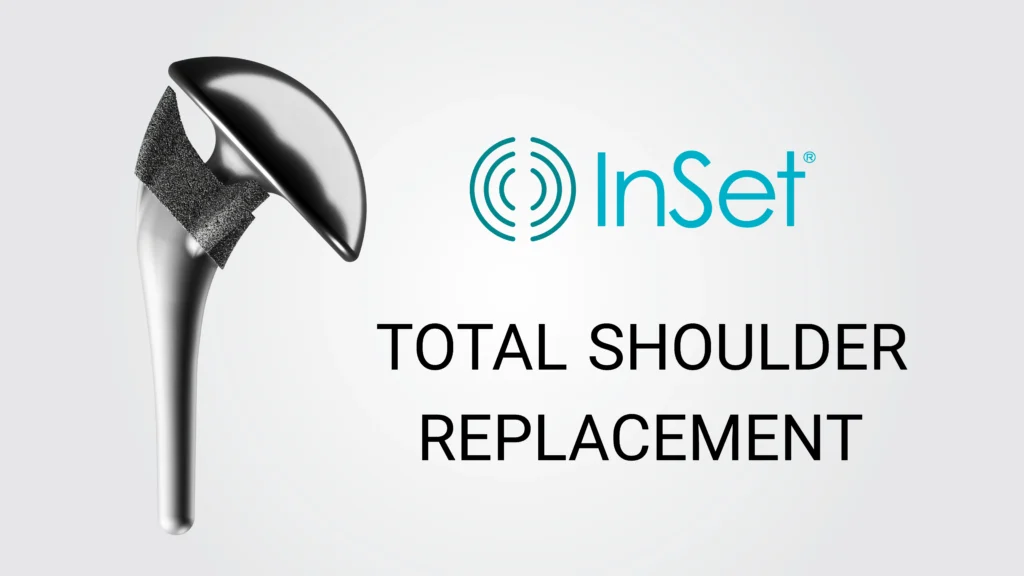
An anatomic total shoulder replacement mimics your natural shoulder structure, replacing the humeral head with a metal ball and resurfacing the glenoid with a plastic socket. This option generally requires a healthy, functioning rotator cuff, since the cuff continues to do a lot of the stabilizing work after surgery.
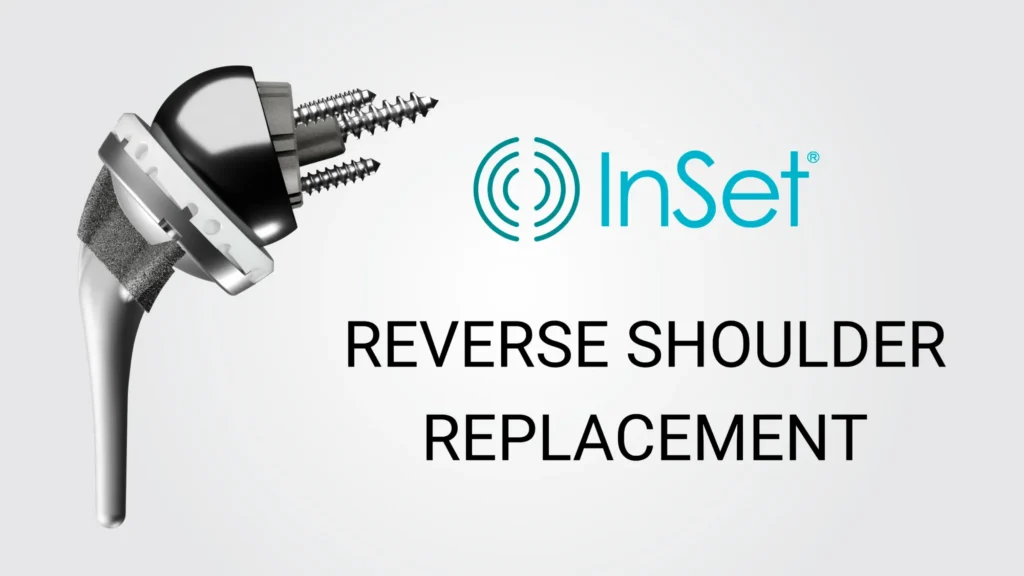
A reverse shoulder replacement flips that relationship. The ball and socket positions are switched, which allows the deltoid muscle to power arm movement even when the rotator cuff is severely damaged or no longer functional. Reverse replacement is often recommended for patients with massive cuff tears, cuff tear arthropathy, or certain complex fractures.
Both procedures can allow a return to exercise, but the muscles doing the heavy lifting during recovery are different, and that matters when we talk about which activities make sense and when.
What Actually Changes Inside Your Shoulder
It helps to understand what surgery actually does before setting expectations for exercise. During either type of replacement, damaged bone and cartilage in the joint are removed and replaced with prosthetic components designed to restore smoother, less painful movement. The surrounding muscles, tendons, and ligaments, the same tissues responsible for stabilizing your shoulder during a golf swing or a freestyle stroke, still have to heal and relearn how to work with the new joint. That soft tissue healing process is really what dictates your exercise timeline, more so than the implant itself. A well-placed implant gives you a strong foundation, but your muscles and tendons need time to catch up around it.
Recovery Timeline: When Exercise Becomes Realistic
Recovery after shoulder replacement moves through fairly predictable phases, even though the exact pace varies from person to person.
In the first several weeks, your arm typically stays in a sling, and activity is limited to gentle, therapist-guided motion. This isn’t the time for exercise in any traditional sense. As healing progresses into the six-to-twelve-week range, physical therapy shifts toward regaining active range of motion and early strength, and light daily activities like dressing or simple chores often become manageable. Somewhere around the three-to-six-month mark, many patients notice a real jump in comfort and function, and this is often when lower-demand exercise, walking, stationary cycling, and light resistance work, becomes appropriate.
Full recovery, meaning the point where more demanding activities are back on the table, generally falls somewhere between six months and a year, and sometimes longer, depending on your starting point and how consistently you’ve stuck with rehab.
These are general benchmarks, not guarantees, and your surgeon’s guidance should always take priority over any timeline you read online.
Factors That Influence Your Return to Exercise
No two recoveries look identical, and a handful of factors tend to explain most of the variation I see between patients.
Age plays a role, though not always in the direction people expect. Younger, more active patients sometimes recover motion and strength faster, but they can also place higher long-term demands on the implant, which factors into activity guidance. The type of replacement matters as well, since anatomic and reverse procedures rely on different muscle groups to power movement.
Your fitness level heading into surgery makes a real difference too. Patients who were reasonably active before their procedure may have a head start on rebuilding strength afterward.
Sport-Specific Notes Worth Knowing
Because patients come to me with such a wide range of goals, I find it useful to talk through a few specific activities individually rather than treating “exercise” as one category.
Swimming places continuous, repetitive stress through an overhead pattern, so I generally ask patients to wait until they have solid range of motion and rotator cuff or deltoid strength, depending on their procedure, before easing back into laps. Starting with kickboard work and gentle strokes tends to go better than jumping straight back into a full workout.
Tennis and pickleball both involve overhead motion and quick, sometimes jarring movements. Doubles play, with its shorter court coverage, may be more realistic to start out with.
Yoga can be a nice fit for shoulder replacement recovery once cleared, since many practices emphasize controlled, mindful movement, though certain weight-bearing poses that load the shoulder directly may need modification.
Cycling, particularly stationary cycling early on, tends to be well tolerated since it doesn’t place direct load through the shoulder, making it a reasonable option earlier in the recovery process than most other activities.
Boating and water sports are activities I personally enjoy, and I’ll tell patients honestly that lower-impact versions, like leisure boating, tend to come back sooner than anything involving sudden shoulder loading, such as wakeboarding or water skiing, which usually needs a longer runway.
What Patients Ask Me
The questions I hear most in clinic tend to cluster around a handful of specific activities. Golfers want to know when they can swing a club again. Swimmers want to know if they’ll get their stroke back. Gardeners want to know if raised beds and overhead pruning are still in their future. Grandparents want to know if they’ll be able to pick up a grandchild without hesitation.
I try to answer these questions honestly rather than with a blanket “yes” that sets someone up for disappointment. A golf swing, for example, asks a lot of the shoulder. It requires rotation, elevation, and a full follow-through, and both the trail and lead shoulders take on real load throughout the swing. Many of my patients do return to golf, often somewhere in the four-to-six-month range or later, but it happens gradually, starting with putting and chipping before progressing to a full swing.
I’ll be direct here: I’d rather see a patient enjoy years of low-impact activity with a durable, well-functioning shoulder than push too hard, too soon, toward something that jeopardizes the outcome we worked to achieve.
Georgia’s climate works in patients’ favor here. Between the golf courses around Newnan and Fayetteville and the lakes within easy driving distance, most of my patients have a season-round opportunity to ease back into the activities they’ve missed, rather than waiting out a long winter before rehab can move outdoors.
Signs You Should Hold Off or Check In
A handful of symptoms suggest it’s worth pausing an exercise routine and contacting your surgical team rather than pushing through. Increasing pain that doesn’t settle with rest is one. A sense that the shoulder feels like it might slip or give out is another, and it shouldn’t be ignored. Swelling, warmth, or redness around the incision site, even months after surgery, deserves prompt attention. So does a sudden loss of motion or strength that seems to come out of nowhere. None of these symptoms are common, but they’re worth paying attention to if they show up.
Summary
Exercise after shoulder replacement is realistic for most patients, but it follows a gradual, staged path rather than an overnight return. Low-impact activities typically come back first, moderate activities like golf and swimming often follow within several months, and high-impact or contact activities generally stay off the table for the sake of your implant’s longevity. If you’re weighing shoulder replacement and exercise is a priority for you, schedule a consultation so we can talk through your specific goals, your anatomy, and what a realistic timeline looks like for the activities you care about most.
Frequently Asked Questions
How soon can I exercise after shoulder replacement?
Light daily activity often resumes within a few weeks, but structured exercise typically waits until your surgeon confirms adequate healing, usually starting around six to twelve weeks for gentle activity and extending to several months for more demanding exercise.
Will I be able to play golf again after shoulder replacement?
Many patients return to golf, often in the four-to-six-month range or later, following a gradual progression that starts with putting and chipping before advancing to a full swing. Your specific timeline depends on your procedure and how your recovery progresses.
What exercises should I avoid after shoulder replacement?
High-impact activities, contact sports, and heavy overhead lifting are generally discouraged, since they can place excessive stress on the implant over time. Your surgeon can offer more specific guidance based on your implant type and activity goals.
Is it different returning to exercise after a reverse shoulder replacement compared to a total shoulder replacement?
The general timeline is similar, but the muscles doing the work differ. Reverse replacement relies on the deltoid muscle rather than the rotator cuff, so strengthening that muscle group becomes the focus of therapy. Some patients need to adjust their mechanics slightly, particularly for overhead activities like swimming or a golf swing, since the joint moves a bit differently than it did before surgery.
