

Medically reviewed by Michael V. Cushing, MD | Reviewed May 2026
If you’ve ever felt your shoulder slip, pop, or suddenly “give out” mid-game, you’re not alone. Shoulder instability in athletes is one of the most common problems I treat at my practice in Newnan and Fayetteville. It can show up quietly as a vague sense of unease in your throwing arm or arrive dramatically as a full dislocation on the field. With the right diagnosis and a treatment plan built around your specific situation, many athletes return to the sport they love.
Key Takeaways
- Shoulder instability in athletes develops when the structures holding the shoulder joint in place become stretched, torn, or weakened, often following a dislocation, subluxation, or years of repetitive overhead stress.
- Athletes in contact sports, throwing sports, and overhead sports tend to carry a higher risk than the general population.
- Symptoms may include a shoulder that “gives out,” pain during activity, apprehension with certain arm positions, and declining performance.
- Initial treatment typically focuses on rest, strengthening, and neuromuscular training. Surgery may be recommended for recurrent instability.
The Shoulder Joint: Built for Motion
To understand instability, it helps to first understand what makes the shoulder so uniquely vulnerable. The shoulder is a ball-and-socket joint where the rounded head of the upper arm bone (humerus) sits inside a shallow socket in the shoulder blade (glenoid). Unlike the hip, which has a deep socket that locks the ball securely in place, the shoulder socket is relatively shallow; imagine a golf ball resting on a tee rather than a ball seated deep in a cup. That design is exactly what makes the shoulder so mobile. You can reach overhead, throw a pitch, swim laps, and spike a volleyball all because of it.
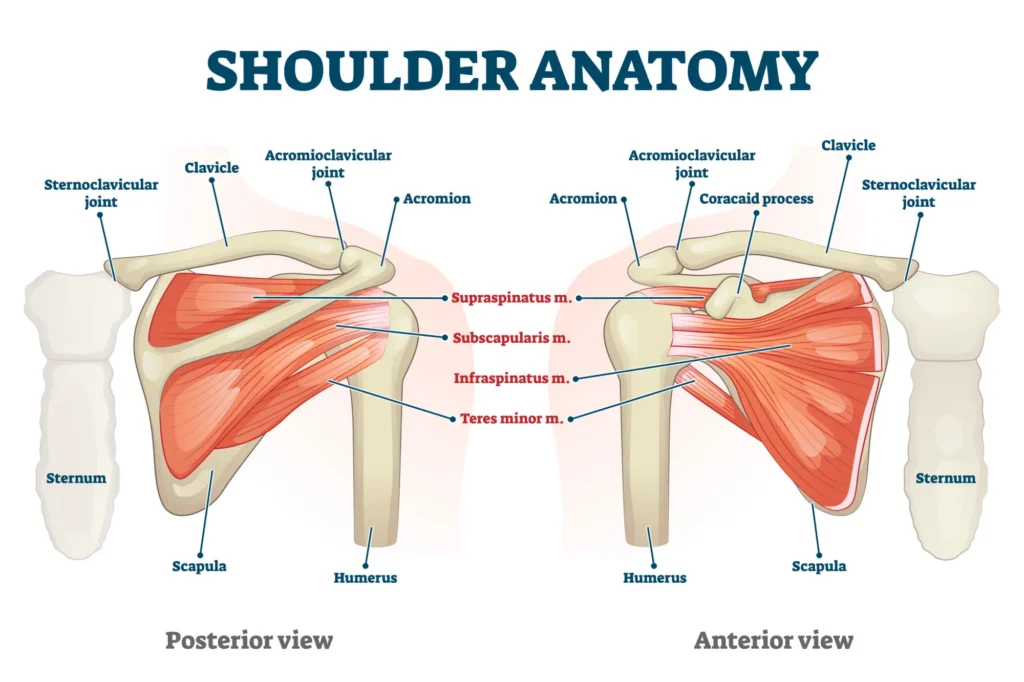
That same freedom comes at a cost. The joint relies heavily on surrounding soft tissue structures to stay stable. The labrum, a ring of cartilage lining the socket, helps deepen and cushion the joint. Ligaments hold the bones together. The rotator cuff muscles actively guide and control movement from every angle. When any of these structures become damaged or overstretched, the shoulder can lose the stability it needs to perform reliably under athletic demand.
What Is Shoulder Instability?
Shoulder instability is a condition in which the head of the humerus moves excessively within the joint. This can mean slipping partially out of the socket, called a subluxation, or coming out completely, which is a full dislocation.
In athletes, instability can develop in a couple of distinct ways. Traumatic instability typically follows a specific injury: a hard tackle, a fall on an outstretched arm, or a collision that forces the shoulder into a vulnerable position. Atraumatic or micro-traumatic instability, on the other hand, builds gradually over time as repetitive overhead movements slowly stretch and loosen the joint’s stabilizing structures. This second type can be particularly tricky, because there isn’t always a clear “moment” patients can point to. The shoulder just starts feeling unreliable, and that feeling tends to get worse, not better, without treatment.
Why Athletes Are More Vulnerable
Athletes in contact sports like football, wrestling, and rugby regularly absorb sudden, powerful forces that can drive the shoulder out of position in an instant. A single impact can stretch or tear the labrum and ligaments, leaving the joint structurally compromised and vulnerable to future episodes.
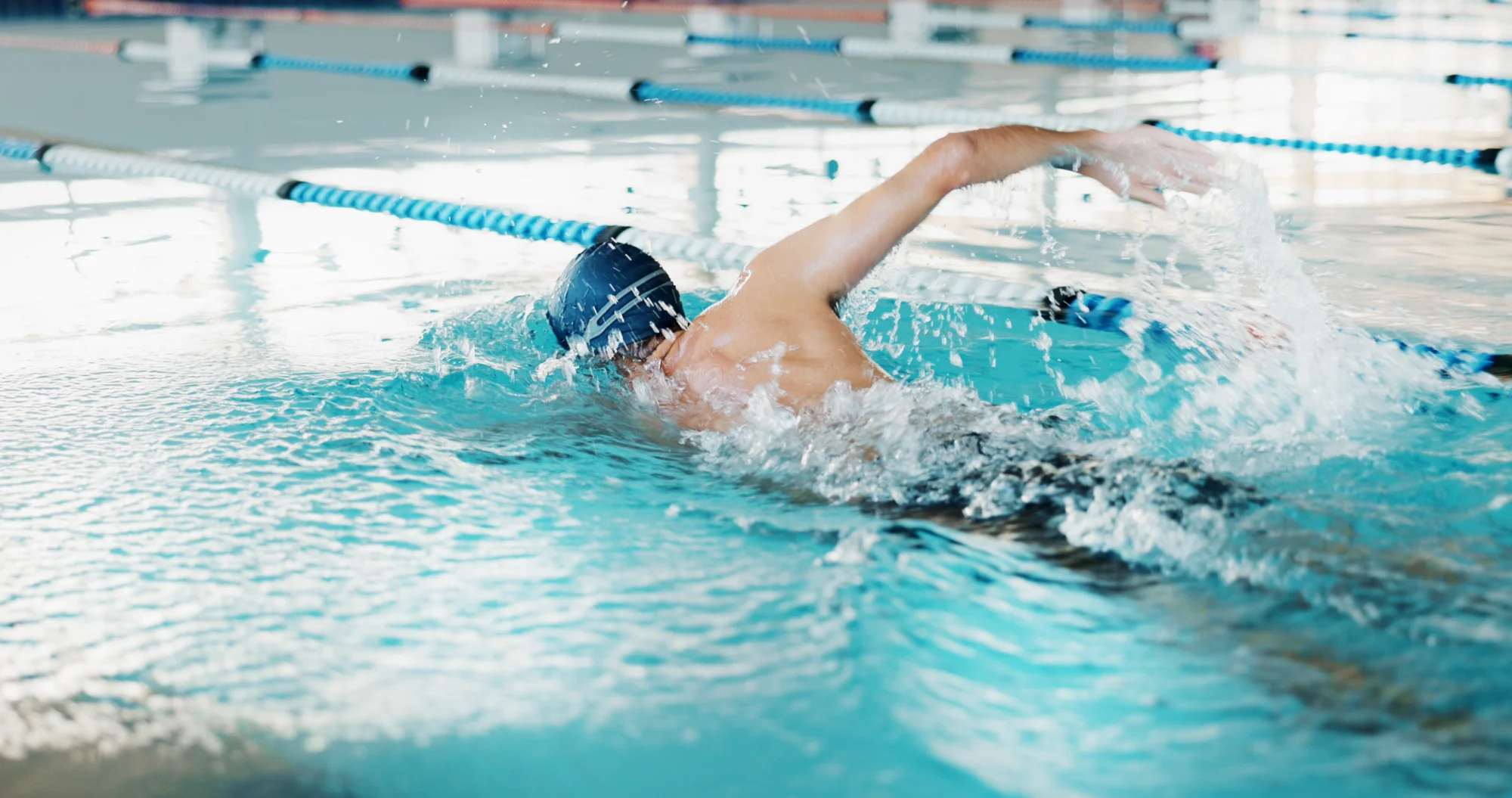
Overhead athletes face a different kind of challenge. Baseball pitchers, volleyball players, swimmers, and tennis players push their shoulders through extreme ranges of motion, often at high velocity and under considerable force. Over time, this can gradually loosen the joint capsule and anterior ligaments, leading to a spectrum of instability, from mild looseness that only subtly affects throwing mechanics to more significant slipping that interferes with daily life.
Younger athletes may also be particularly susceptible. In adolescent athletes, the capsule, ligaments, and neuromuscular control systems are still developing. That combination can increase the risk of a first dislocation and may increase the likelihood of recurrent instability if the injury is not appropriately evaluated and treated.
Common Causes in Sport
The most common pattern I see in my practice is anterior instability, where the ball of the shoulder moves forward out of the socket. This typically occurs when the arm is forced into a raised, externally rotated position, common during tackles, awkward falls, or contested catches. When the humeral head forcefully displaces anteriorly, it can tear or detach the anterior labrum. This is known as a Bankart lesion and is commonly associated with recurrent anterior instability.
Posterior instability, where the ball slips backward, is less common but can affect linemen, weightlifters, and athletes who repeatedly load the shoulder in a forward, internally rotated position. Multidirectional instability is another pattern worth knowing about. Here, the shoulder is loose in multiple directions, often due to a combination of generalized ligament laxity and muscle imbalance. It tends to affect overhead athletes and requires a thoughtful, individualized treatment approach.
Recognizing the Symptoms
Shoulder instability in athletes can look and feel different from person to person. Some of the most common symptoms my patients describe include:
- A shoulder that “gives out,” pops, or shifts during activity
- Pain or discomfort when throwing, reaching overhead, or absorbing contact
- A sense of apprehension or a reluctance to move the arm into certain positions
Not every episode involves dramatic pain. Many athletes also notice pain with throwing or reaching overhead, or just a vague sense that the shoulder doesn’t feel right. Others experience strong apprehension without ever having had a full dislocation. Performance can take a hit, too, with loss of throwing velocity or endurance often being one of the first signs something is off.
How I Diagnose Shoulder Instability
When you come in for an evaluation, I’ll start with a thorough conversation about your symptoms, including when they started, what triggered them, how they’ve changed, and what positions or movements seem to provoke the problem. Your sport, your position, and your activity level all factor into how we interpret the picture.
The physical exam is central to the process. I’ll assess your shoulder’s strength and range of motion, and use targeted orthopedic tests designed to evaluate joint stability in different directions. These maneuvers help identify where the instability is originating and whether the labrum, ligaments, or capsule appear to be involved.
Imaging plays an important supporting role. X-rays can reveal bony abnormalities, including fractures at the edge of the socket (bony Bankart lesions) or changes to the humeral head (Hill-Sachs defects) that sometimes occur after dislocation. MRI may provide a more detailed look at the soft tissue structures, helping to identify labral tears, ligament injuries, and capsular damage that don’t appear on plain films.
Treatment for Shoulder Instability in Athletes
The right treatment path depends on the severity of structural damage, how many instability episodes have occurred, the athlete’s age, the demands of their sport, and their personal goals.
Conservative Management
For a first-time dislocation in a younger, active patient, initial management typically focuses on protecting the shoulder, managing pain, and then beginning a structured rehabilitation program. Rest and activity modification allow the acute injury to settle. From there, treatment may shift to rebuilding rotator cuff strength, improving scapular control, and restoring the neuromuscular coordination that keeps the shoulder centered during dynamic movement.
This targeted strengthening and neuromuscular retraining can be very effective for the right candidate. However, if an athlete continues to experience episodes of instability despite committed rehabilitation, that pattern may suggest underlying structural damage that requires additional treatment options.
Surgical Treatment
Surgery may be recommended when instability is recurrent, when significant structural damage is present, or when conservative care hasn’t provided adequate relief. The most common procedure for anterior instability is an arthroscopic Bankart repair, where the torn labrum is reattached to the edge of the glenoid socket using small anchors. When significant bone loss is present, additional bone grafting procedures may need to be considered.
The recovery timeline can vary based on the extent of the repair, how rehabilitation progresses, and the demands of the athlete’s specific position and sport. My advice: don’t rush the return. Getting back before the shoulder is truly ready raises the risk of re-injury.
Summary
The shoulder’s anatomy makes it uniquely vulnerable in athletic environments, and once instability takes hold, it can significantly affect performance, confidence, and quality of life if it isn’t properly addressed. With the right diagnosis and a treatment plan tailored to your sport and your goals, many athletes can confidently return to activity. If something has felt off with your shoulder, reach out to my office. You deserve a clear answer and a path back to the game.
Frequently Asked Questions
Can shoulder instability heal on its own?
Mild instability without significant structural damage may improve with targeted rehabilitation. However, instability following a traumatic dislocation or involving a labral tear is unlikely to fully resolve without proper treatment. In young, active athletes, the risk of recurrence after a first dislocation can be quite high. A professional evaluation helps clarify whether conservative care is a realistic path forward or whether a more proactive approach makes more sense for your situation.
How do I know if I need surgery for shoulder instability?
Surgery may be recommended when instability is recurrent, when conservative treatment hasn’t provided adequate relief, or when imaging reveals significant structural damage such as a labral tear or notable bone loss. The decision is always individualized. It depends on your age, activity level, injury pattern, and goals.
Will I be able to return to my sport after treatment?
Many athletes do return to sport following treatment for shoulder instability. With surgical repair, the return-to-sport timeline is commonly around 5-7 months, depending on healing and rehabilitation progress. However, timelines can vary between athletes depending on a variety of factors. The most important factor isn’t the calendar; it’s whether your shoulder and your neuromuscular control are genuinely ready to handle the demands of your sport.
Is shoulder instability the same as a shoulder dislocation?
Not exactly. A dislocation is a single event where the ball of the shoulder comes fully out of the socket. Shoulder instability is a broader condition describing the joint’s underlying tendency to slip or shift abnormally. A dislocation can certainly cause instability, but instability can also exist without a complete dislocation, such as with repeated subluxations or generalized looseness of the joint.
