


The rotator cuff is a group of four muscles and their tendons in the shoulder that stabilize the joint and enable arm movement. In this post, we’ll explore what the rotator cuff is, its anatomy, functions, common injuries, and treatment options.
Key Takeaways
- The rotator cuff is important for shoulder stability and enables a wide range of arm movements.
- Common rotator cuff injuries include tendonitis and tears, primarily resulting from repetitive stress and degenerative changes.
- Treatment ranges from non-surgical options like physical therapy and medications to surgical procedures for severe injuries, with preventive measures including strengthening exercises and maintaining good posture.
Understanding the Rotator Cuff
The rotator cuff plays a key role in shoulder stability and movement, holding the joint in place and facilitating a wide range of arm motions. It allows for controlled movement and strength during various activities. Consider the shoulder as a ball-and-socket joint where the rotator cuff muscles ensure that the ball, or the head of the humerus, stays securely within the shallow socket of the shoulder blade.

These muscles and their tendons work together to support and move the shoulder. They are particularly important for rotating and lifting the arm in multiple directions. Without them, even basic tasks like reaching overhead or lifting objects would be difficult.
Anatomy of the Rotator Cuff
The rotator cuff is made up of four muscles that originate from the shoulder blade (scapula) and attach to the upper arm bone (humerus). Together, they provide stability and allow smooth, controlled movement of the shoulder:
- Supraspinatus: Runs across the top of the scapula and initiates lifting the arm away from the body (abduction). It is the muscle most commonly involved in rotator cuff tears.
- Subscapularis: Located on the front surface of the scapula, it rotates the arm inward (internal/medial rotation).
- Infraspinatus: Covers much of the back of the scapula and rotates the arm outward (external/lateral rotation).
- Teres minor: Sits just below the infraspinatus on the outer edge of the scapula and also assists with external rotation of the arm.
Working together, these muscles compress the humeral head into the socket (glenoid) of the shoulder blade, helping stabilize the joint during movement.
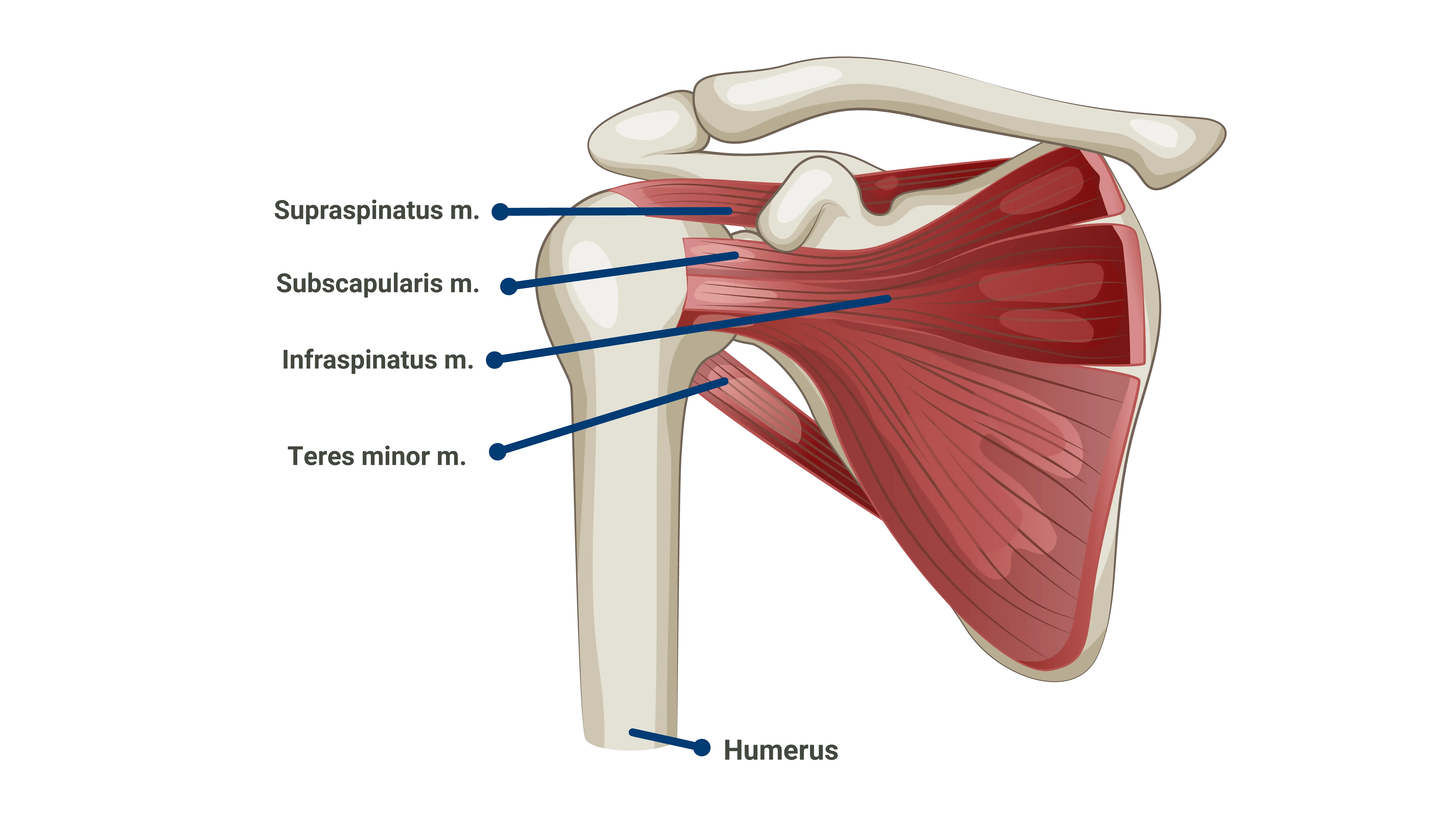
These muscles work together to enable a wide range of shoulder movements, from daily activities to complex athletic maneuvers.
Common Rotator Cuff Injuries
Rotator cuff injuries are common and can hinder shoulder mobility and strength. Each type of injury affects the shoulder differently, but all can lead to considerable discomfort and functional limitations. These injuries typically include tendonitis, partial tears, and full-thickness tears.
Partial-thickness tears involve damage to some fibers of the rotator cuff tendon tissue while it remains attached to the bone, whereas full-thickness tears involve a complete tear from the bone.
The supraspinatus tendon is the most frequently affected tendon in these injuries, often leading to functional impairments. Daily activities can become challenging with a rotator cuff injury. Simple tasks like dressing, grooming, or reaching overhead can cause significant pain and discomfort.
Recognizing the common types of rotator cuff injuries and their impact can aid in early symptom detection and timely treatment.
Causes of Rotator Cuff Injuries
Rotator cuff injuries often result from repetitive stress or age-related degeneration. Professions that involve repetitive shoulder movements, such as painting or sports, can increase the likelihood of developing rotator cuff tears. Additionally, increased age, poor posture, and bone spurs are common risk factors for rotator cuff injuries. Being aware of these risk factors aids in taking preventive measures.
Symptoms of a Rotator Cuff Injury
Symptoms of rotator cuff injuries can vary but often include arm pain and a sensation of shoulder weakness. The pain is typically a dull, deep ache that can interfere with sleep, making it difficult to find a comfortable position.
Certain movements may also become challenging as a result of the pain and weakness, such as reaching behind the back or brushing hair. Early recognition of these symptoms can lead to timely diagnosis and treatment.
Diagnosing Rotator Cuff Injuries
Diagnosing a rotator cuff injury often involves a medical history review, a physical examination, and imaging tests. During the physical examination, your doctor may assess tenderness and evaluate the range of motion. The shoulder may be pressed on and moved to identify pain and assess muscle strength.
Imaging tests are commonly ordered to confirm the diagnosis. These may include magnetic resonance imaging (MRI), which provides detailed views of soft tissues. X-rays can help rule out bone changes, and ultrasound can provide dynamic imaging of tendon movement.
Accurate diagnosis is key to determining the most appropriate treatment plan.
Treatment Options for Rotator Cuff Injuries
Treatment options for rotator cuff injuries vary depending on the severity of the injury, ranging from conservative to surgical treatments. Non-surgical options may include physical therapy exercises, nonsteroidal anti-inflammatory drugs (NSAIDs), and corticosteroid injections. These treatments aim to reduce pain and inflammation while improving shoulder function.
For severe rotator cuff tears, or tears that do not respond to conservative treatment, surgical intervention may be recommended. Common surgical procedures include minimally invasive arthroscopic repair and reverse shoulder replacement.
An individualized treatment plan is important for effective recovery, whether through non-surgical treatment or surgical means. Consulting an experienced shoulder specialist to evaluate the injury and guide a treatment plan can be a helpful step.
Preventing Rotator Cuff Injuries
Preventive strategies to reduce the risk of rotator cuff injuries include:
- Regular strengthening and flexibility exercises.
- Stretching to maintain mobility.
- Paying attention to body signals and adjusting activity if pain develops.
- Maintaining good posture and using proper technique during activities, especially when overhead movements are involved.
These steps can help lower the risk of injury and support long-term shoulder health.
Summary
In summary, the rotator cuff plays an essential role in shoulder stability and movement. Understanding its anatomy, functions, and common injuries can help in recognizing symptoms early and seeking appropriate treatment. Preventive measures, such as strengthening exercises and maintaining flexibility, can help lower your risk of a rotator cuff injury.
Frequently Asked Questions
What are the main functions of the rotator cuff?
The rotator cuff primarily enables a large range of arm movements, like abduction and rotation, while ensuring shoulder stability by keeping the humeral head securely in place.
What are common symptoms of a rotator cuff injury?
Common symptoms of a rotator cuff injury include a deep, dull ache in the shoulder, pain during specific movements, and arm weakness, which can hinder daily activities.
How are rotator cuff injuries diagnosed?
Rotator cuff injuries are typically diagnosed through a combination of medical history, physical examination for tenderness and range of motion, and imaging techniques such as MRI, ultrasound, and X-rays. This comprehensive approach helps promote an accurate diagnosis for effective treatment.
What are the treatment options for rotator cuff injuries?
For rotator cuff injuries, treatment options range from non-surgical approaches like physical therapy and anti-inflammatory medications for mild cases, to surgical interventions such as arthroscopic repair or reverse shoulder replacement for more severe injuries. Choosing the appropriate treatment depends on the injury’s severity and your individual needs.
How can I prevent rotator cuff injuries?
To help reduce your risk of rotator cuff injuries, strengthen your shoulder muscles, maintain flexibility with regular stretching, and pay attention to your body’s signals to avoid painful activities. Additionally, ensure proper technique when taking part in activities.
