


Shoulder replacement surgery has come a long way. Not long ago, patients facing severe arthritis or irreparable rotator cuff damage had limited options. Today, advances in implant design, surgical planning software, and bone-preservation techniques are shifting what is possible. Technology is changing shoulder replacement surgery in ways that may improve surgical planning, implant performance, and aspects of recovery. As a shoulder surgeon, this evolution is exciting, not because the technology is impressive on its own, but because of what it may mean for my patients’ day-to-day quality of life.
Key Takeaways
- Modern shoulder replacement technology has evolved significantly, with newer implant systems designed to address some of the most common causes of implant failure
- 3D preoperative planning tools may allow surgeons to map out precise implant placement before the patient ever enters the operating room, potentially improving accuracy and reducing variability in outcomes.
- Bone-preserving implant designs aim to protect a patient’s natural bone stock.
A Brief Look at Where We Started
To appreciate where shoulder replacement technology is today, it helps to understand where we started. Early implants were relatively simple by today’s standards. Surgeons worked with basic X-ray imaging and relied heavily on intraoperative judgment to size and position the components. The results were often meaningful in terms of pain relief. However, long-term durability remained a persistent challenge.
The glenoid, the socket component of the joint, was, and still is, a common point of failure in a total shoulder replacement. Traditional glenoid implants were designed to sit on the surface of the shoulder blade. Over time, the repetitive stresses of arm movement could cause the bond between the implant and the bone to gradually weaken. Patients might experience pain, a grinding sensation, or a feeling of instability in the shoulder. Revision surgery to address a loose glenoid, while often successful, is technically more demanding than the original procedure and may carry additional risks.
Engineers and surgeons took notice of this problem. They began asking a fundamental question: What if we could design an implant that holds on in a more mechanically sound way? That question has contributed to several important advances in shoulder replacement technology over the past decade.”
Advances in Implant Design
One of the most meaningful developments in shoulder replacement surgery has been the evolution of glenoid implant design. Rather than relying on a component that sits flush against the bone surface, some newer systems take a fundamentally different approach to fixation and long-term stability.
I regularly use the InSet® Total Shoulder System from Shoulder Innovations, which was designed with the goal of addressing glenoid loosening. Instead of resting on top of the bone, the glenoid implant is positioned within a prepared area of denser, stronger bone tissue, a zone that tends to provide a more mechanically stable foundation. Biomechanical analysis using finite element testing has demonstrated a reduction in what engineers refer to as “rocking horse” stresses. These are the repetitive back-and-forth mechanical forces that, over time, are believed to contribute most to implant loosening.
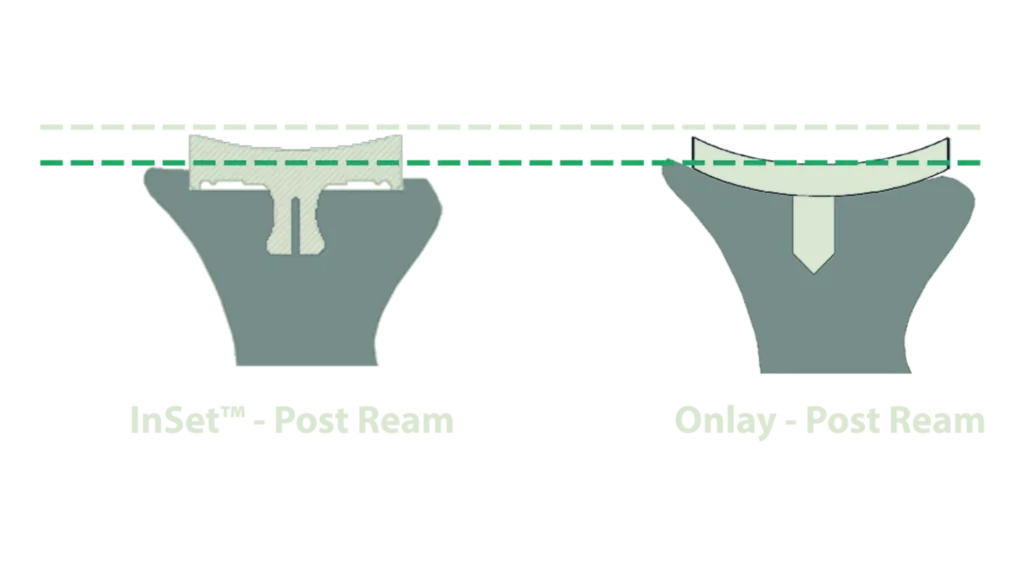
Humeral components, the metal ball and stem placed on the upper arm bone, have also advanced considerably. Modern designs come in a range of stem lengths and profiles to accommodate different patient anatomies. Shorter, bone-sparing stems are now available and may be appropriate for many patients. Stemless options have also emerged, allowing surgeons to replace the joint while removing even less bone.
The Role of 3D Surgical Planning
Before modern imaging technology became widely available, a surgeon’s primary preoperative tool was a standard X-ray. X-rays remain important and valuable. But they offer only a two-dimensional view of a three-dimensional structure. For shoulder replacement, where precise component positioning has a direct impact on how well the implant performs, that limitation matters.
CT-based 3D planning software now gives surgeons a detailed, three-dimensional model of a patient’s individual shoulder anatomy before they ever step into the operating room. ProVoyance® is one example of this kind of tool. It allows surgeons to virtually plan implant placement, assess bone loss or deformity, and simulate how different implant sizes and positions will interact with a patient’s specific anatomy. Every shoulder is different. Planning software allows you to treat it that way.
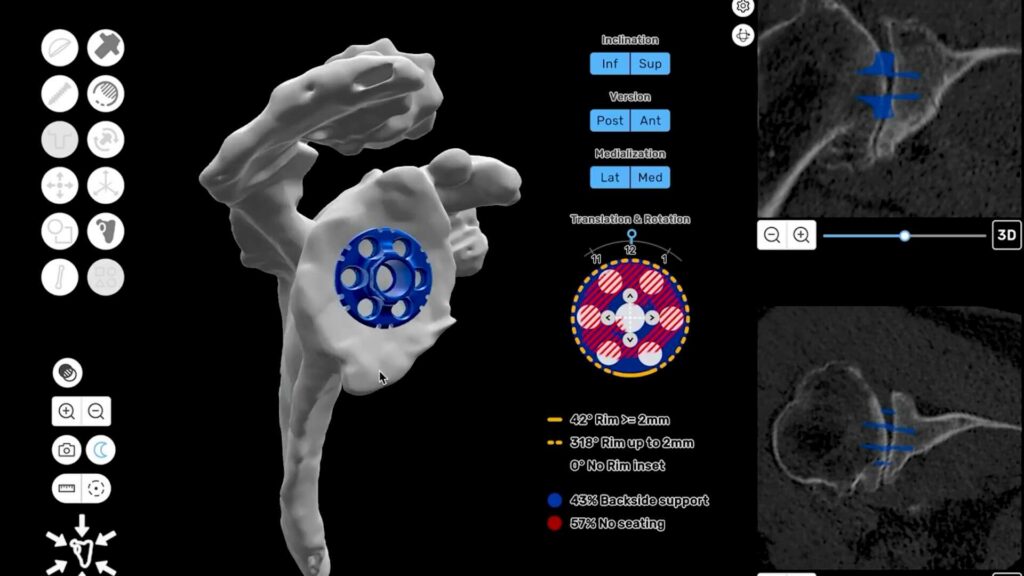
This kind of preoperative planning may help in several meaningful ways. First, it allows the surgical team to anticipate challenges before they arise in the operating room; for example, identifying significant socket erosion that may need to be addressed with an augmented component. Second, it supports selection of the most appropriately sized implant for that specific patient. Third, it may reduce variability in outcomes. Research consistently points to proper component positioning as one of the key factors in shoulder replacement longevity, and better planning tools support more consistent execution.
Planning software does not replace surgical experience and judgment. A map is only as useful as the person reading it. But it does give an experienced surgeon a clearer picture before the first incision is made.
Bone Preservation as a Core Design Goal
One theme that runs consistently through modern advances in shoulder replacement is bone preservation. Historically, some implant designs required removing a significant amount of native bone to achieve proper fit and fixation. This was simply a consequence of how those implants were engineered, not a deliberate shortcoming.
Newer thinking directly challenges this approach. If an implant can achieve strong, stable fixation while removing less bone in the process, several things become possible. Patients may experience fewer complications related to bone integrity. The shoulder’s natural structure is better maintained throughout the recovery process. And perhaps most importantly, if a patient ever needs revision surgery, whether years later due to normal wear, or for another clinical reason, the surgeon has more native bone to work with.
Materials That Work With the Body
The materials used in shoulder implants have also improved significantly over time. Modern humeral components are typically made from titanium or cobalt-chromium alloys, materials that are strong, durable, and well-tolerated by the body. But perhaps just as important as the base materials is what the implant surfaces are designed to do.
Many contemporary humeral stems feature porous coatings on their surface. This texture is specifically designed to encourage osseointegration, a process in which the patient’s own bone cells grow into and around the implant surface over time. When osseointegration occurs effectively, the implant becomes anchored biologically as well as mechanically. That kind of fixation tends to be highly durable.
Some systems use curved, porous-coated fins to maximize rotational stability, meaning the implant is less likely to shift or twist under the load of daily activity. Others emphasize aggressive proximal coatings designed to anchor the stem higher up in the bone, which can be particularly helpful for patients with lower bone density. While the specific design approach varies by system, the underlying goal is consistent: create an implant that integrates naturally with the patient’s anatomy and remains stable over many years of use.
What This Means for You as a Patient
If you are considering shoulder replacement surgery, or if a surgeon has recommended it for you, these technological advances are genuinely relevant to your situation. I want to put them in the right context, though.
Technology is a tool. Its value depends entirely on how it is used and by whom. The implant design, the planning software, and the bone-sparing technique all matter. But they work best when applied by a surgeon with experience in shoulder replacement. The shoulder is one of the most complex joints in the body. Proper component placement, soft tissue balancing, and real-time intraoperative decision-making require the kind of focused training that comes through fellowship-level specialization and a high volume of cases performed specifically in the shoulder.
When you are evaluating your surgical options, here are some questions worth asking any surgeon you consider:
- How many shoulder replacements do you perform each year, and is shoulder surgery your primary specialty focus?
- What imaging and 3D planning tools do you use before surgery?
- What implant system do you use, and why did you select it?
- How do you approach bone preservation, and what options are available for my specific situation?
The answers to those questions can tell you a great deal about whether a surgeon’s approach aligns with what current evidence suggests leads to the best outcomes.
Summary
Technology is changing shoulder replacement surgery. From implants designed to resist loosening by engaging denser, more stable bone, to 3D planning platforms that allow surgeons to map each individual case before it begins, to humeral components that promote the patient’s own bone to grow into and anchor the implant, the field has advanced considerably from where it started. At the same time, no technology substitutes for the expertise, training, and judgment of an experienced, fellowship-trained shoulder specialist. The best outcomes tend to emerge when advanced tools and advanced training meet in the same hands.
Frequently Asked Questions
What is glenoid loosening, and why is it such a concern?
Glenoid loosening refers to the gradual failure of the bond between the plastic socket component and the shoulder blade. It is a common reason shoulder replacements require revision surgery. Some modern implant designs that seat the glenoid within stronger, denser bone, rather than on the surface, are specifically engineered to reduce the risk of this occurring over time.
How does 3D preoperative planning actually affect my surgery?
3D planning software allows your surgeon to build a detailed, patient-specific model of your shoulder anatomy before the operation. This may help with selecting the appropriate implant size and design, planning precise component positioning, and identifying any anatomical challenges that need to be addressed during surgery. The goal is to enter the operating room with a clear, well-considered plan.
Does the type of implant system my surgeon uses really make a difference?
It may. Implant design affects how the components integrate with your bone, how they perform under the stresses of daily activity, and how long they may last. That said, implant selection is only one part of the equation. Surgical technique, proper component positioning, and postoperative rehabilitation all play significant roles in determining long-term outcomes.
